Wood-Sided Pole Barns in Lubbock, TX
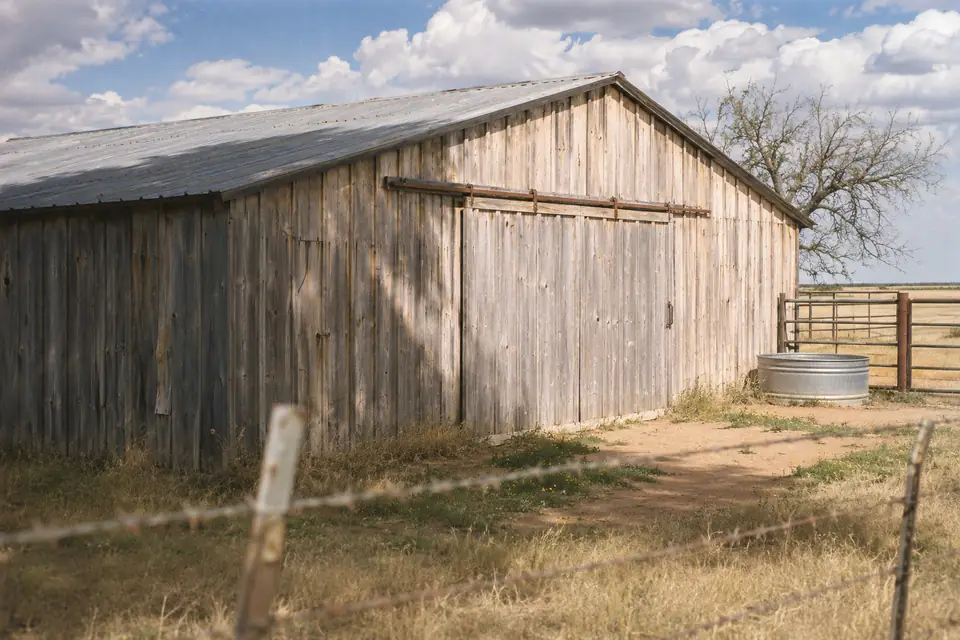
We build wood-sided pole barns in Lubbock. At Pole Barn Builders Lubbock TX we settle which boards you want before the girt layout ever gets drawn. Vertical board-and-batten fastens to horizontal nailers. Plank and shiplap want furring running the other way. The siding you pick decides what goes on the frame. Change your mind once the frame is standing and we are adding members to it, not swapping an order.
Wind governs out here. An ordinary building answers to 115 mph on ground open enough to count as the more exposed terrain category. Something has to resist that load. Boards contribute less of it than a screwed-down steel skin. Which is why your quote carries a bracing line you would never see on a steel building. Tell us which faces you want in wood and which ones you will take in steel. We will draw the wall that way.
Get a quote on your building
Why Owners in Lubbock Still Pick a Wood-Sided Pole Barn
Board-and-batten is wide boards with narrow strips covering every joint. It sheds water well and reads as a barn from the road. Plank and shiplap are the other routes in, along with manufactured panels. All of them fasten to horizontal girts spanning between your posts.
We put the bracing on the quote as its own line. Wood does less for a building's racking resistance than properly fastened steel does. The engineer usually adds diagonal bracing or a structural sheathing layer behind the boards. It is part of the price of the look. We would rather you saw it than found it.
What the frame has to do differently for wood
- Which way the boards run
Boards standing vertical need horizontal nailers at a spacing the boards can actually span. Boards laid horizontal need furring run up and down over the girts. Those are two different frames. We draw the one your siding needs.
- The gap behind the boards
Furring holds the siding off the frame. Water that gets behind can then drain, and air can dry it out. That thickness turns up at every window and door. We set the jamb depth and the trim returns from it on paper.
- Where the wood stops and the steel starts
Most owners end up with both. The two materials sit at different thicknesses. The horizontal line where they meet needs flashing and a framing offset planned for it. That line belongs on the elevation before anybody orders either material.
- Fasteners chosen for the species
Some woods react with some fasteners. They leave a dark streak running down the board from under every head. A wall that stains from its fixings cannot be washed back. The fastener has to suit the wood you chose, not whatever the crew has on the trailer.
Making boards last out here
- Sun
About 3,200 hours of sun a year breaks the surface of a board down. It pulls the color out of a finish too. A good stain or paint plus a recoating plan is what buys the years back. We will walk you through that schedule before you commit.
- Wind-driven rain
Rain here arrives sideways. Sideways rain gets behind boards. We flash the openings and leave a gap behind the siding. Water that does get in can then drain and dry. It does not sit against your wall. We keep the bottom of that gap clear.
- Dry air and movement
Boards shrink and swell as the air changes. The air here swings hard between a wet May and a dry winter. We space and fasten the boards to allow that movement. Boards pinned tight split at the screws.
- Contact with the ground
Keep the wood up off the dirt. A treated skirt board takes the splash at the base of your wall. Sandy ground wicks and throws grit. Wood at grade is where rot starts.
The upkeep routine we hand over
- Step 01Wash
Rinse the dust and mildew off your walls once a year.
- Step 02Inspect
Look over your walls for splits, loose boards, rot at the base, gaps at the trim.
- Step 03Repair
Swap damaged boards out and re-seal every cut end you make.
- Step 04Refinish
Recoat on the schedule your exposure calls for, not ours.
Wood against steel, honestly
| What you weigh | Wood | Steel |
|---|---|---|
| Upkeep | Recoat every few years, sooner on a sun-facing wall | Little; check the fasteners and the washers |
| Look | Warm, traditional, and easy for us to customize | Clean lines, a factory finish, a long color list |
| Repair | Pull and replace single boards | Replace whole panels |
| Structural help | Less, so the bracing gets designed separately | More, as long as we fasten it to the plan |
Hail, and what it does to a board
Roughly fifty days a year bring hail somewhere in this radar area. May is worst, June next. The largest stone recorded close to town in recent years measured four and a half inches across. Steel takes a hit like that as a dent. Wood takes it as a bruise or a split. That is the harder of the two problems. A split opens end grain, and end grain drinks whatever lands on it.
So we would rather put the boards where the building itself shelters them. A deeper overhang goes on the face that gets the weather. Steel goes on the lower wall where splash and hail collect. Wood goes on the elevations under cover. That is how the look survives a bad hail year. We mark on the elevation which boards sit exposed and which ones do not. You can decide from there how much upkeep you are willing to own.
The middle path most owners land on
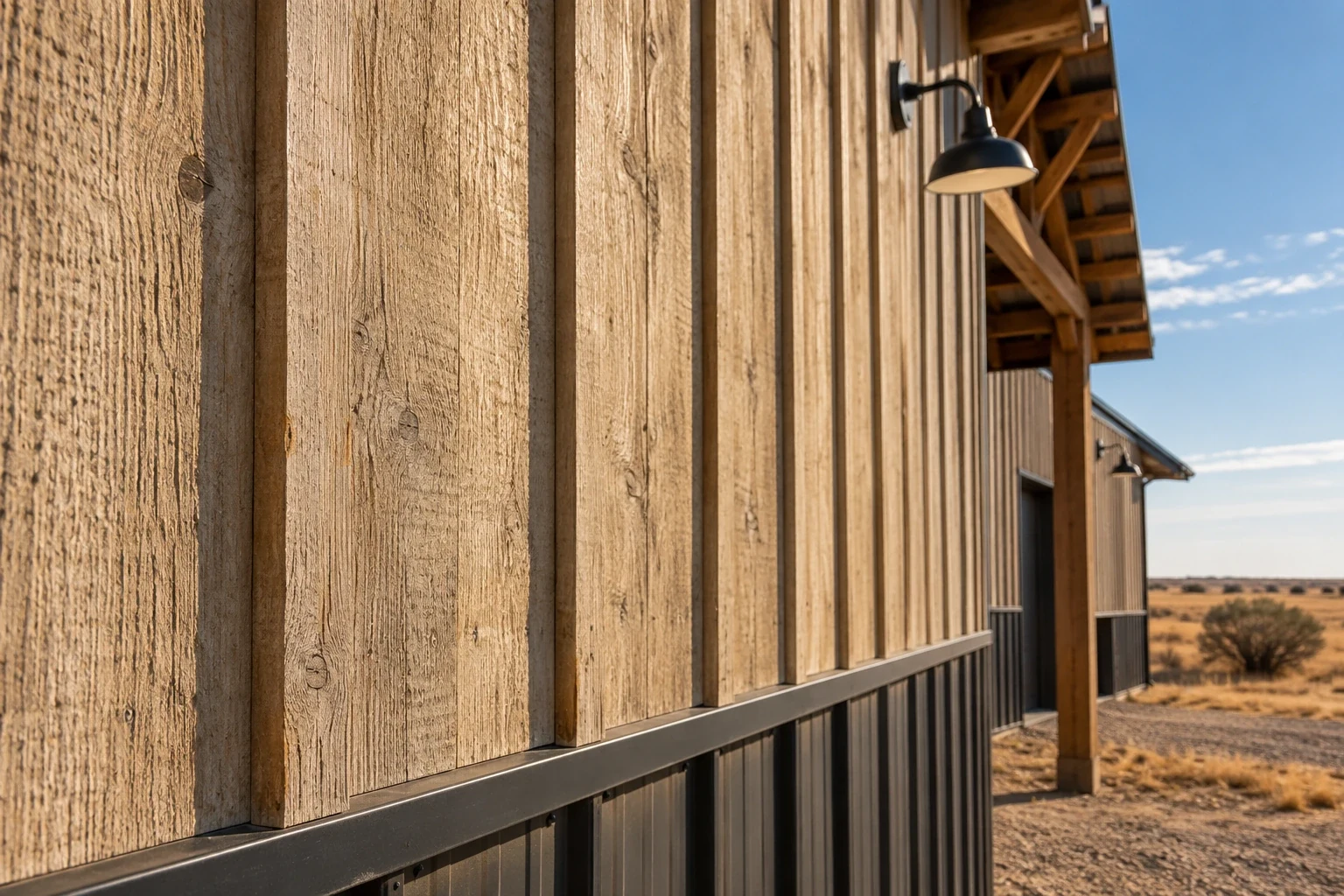
We would rather build you the mix than talk you out of wood altogether. Steel on the roof and the lower walls, with wood on the gables or the front face. That is where a lot of owners end up. It buys the barn look without putting a brush in your hand for the whole building every few years.
Whichever way you go, ask us about the finish and the recoating interval before you sign anything. A wood barn left alone ages faster out here than most people expect.
Wood siding questions we get
Is wood siding more expensive than steel?
Usually, both to put up and to keep up. The species and the finish are what move the number. We quote wood and steel side by side on the same building whenever you are deciding. Our two numbers are then comparable.
What finish is best?
A penetrating stain with UV protection is the common choice, and paint protects longer while demanding more when it finally goes. Under this much sun we treat the recoating interval as the number that counts. The brand on the can matters less.
Does wood siding burn more easily?
Wood is combustible and steel is not. That counts for something when the building sits close to others, or when an insurer is reading the file. We will help you site the building with the distance to the next structure in mind, since that is the part you can still change.
Can I mix wood and steel?
Yes, and it is the version we build most. Steel takes the weather on the roof and the lower wall, while wood carries the look on the faces you see from the house. We detail the line where the two meet.
What wood is best for barn siding?
Cedar and rough-sawn pine both come up, and so does pressure-treated lumber, with each one trading cost against durability and the finish it will hold. Tell us which wall faces the afternoon sun. That narrows it quickly.
Does wood siding affect insurance?
It can, since wood burns where steel will not. Ask your insurer before you settle the design, because the answer sometimes makes the mixed approach the cheaper one overall.
Who is the best company for wood-sided pole barns in Lubbock, TX?
Compare method, not claims. On a wood job we price the diagonal bracing or structural sheathing as its own line, since wood does less for racking than steel does. We name the species and the finish. We name the recoating interval too. We flash the openings and leave a drainage gap behind the boards. We detail the joint where wood meets steel, because that joint is where leaks start. Site visits are billable and we say so first. Ask the next builder you call how they are bracing a wood-sided wall.
Like the wood look?
Describe the barn you are picturing and which faces you want in wood. We will plan the siding and the bracing behind it. The price and our recoating schedule come with it.