Livestock Barns in Lubbock, TX
At Pole Barn Builders Lubbock TX we build livestock barns in Lubbock and across the South Plains to suit the animals you keep, not a standard shed size. Send the species and the head count. Tell us how the building gets worked through the year. We lay out how much of the wall stays open. We place the partitions, the creep areas, the holding pen. The fence line, the alleys, the loading point all tie into the building, not against it.
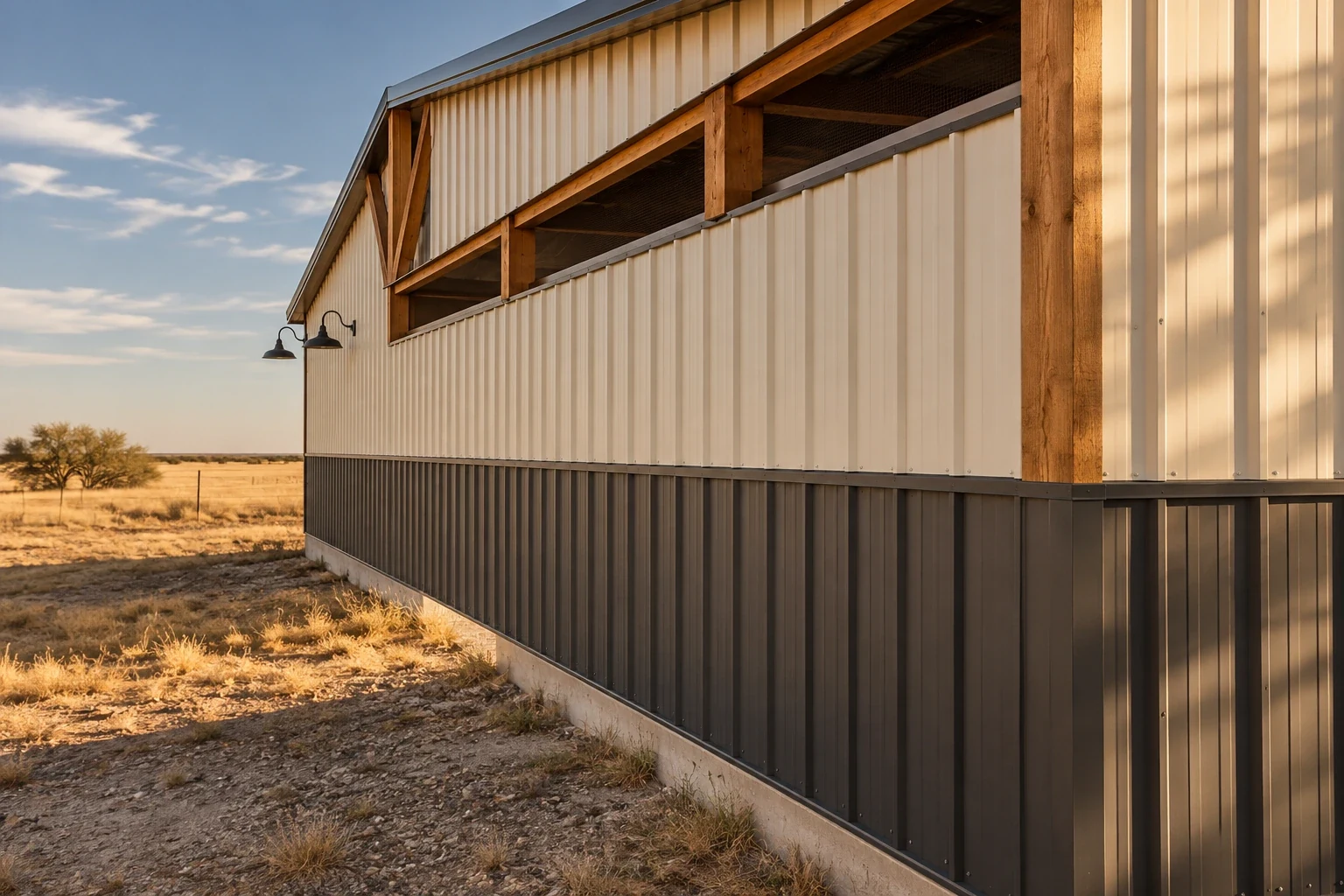
Animals lean, rub, kick. Steel panel within reach of them dents inward. It works the fasteners loose until the sheet is hanging on by its washers. We back the lower wall with a solid kick wall of treated lumber or concrete. The steel starts above it. That keeps the panel out of reach. It gives you a surface a skid steer can scrape against without tearing the building apart. Tell us what you are running and where the site is. We will lay the shed out and price it from there.
Get a quote on your building
Livestock Barns in Lubbock, Matched to the Animals You Keep
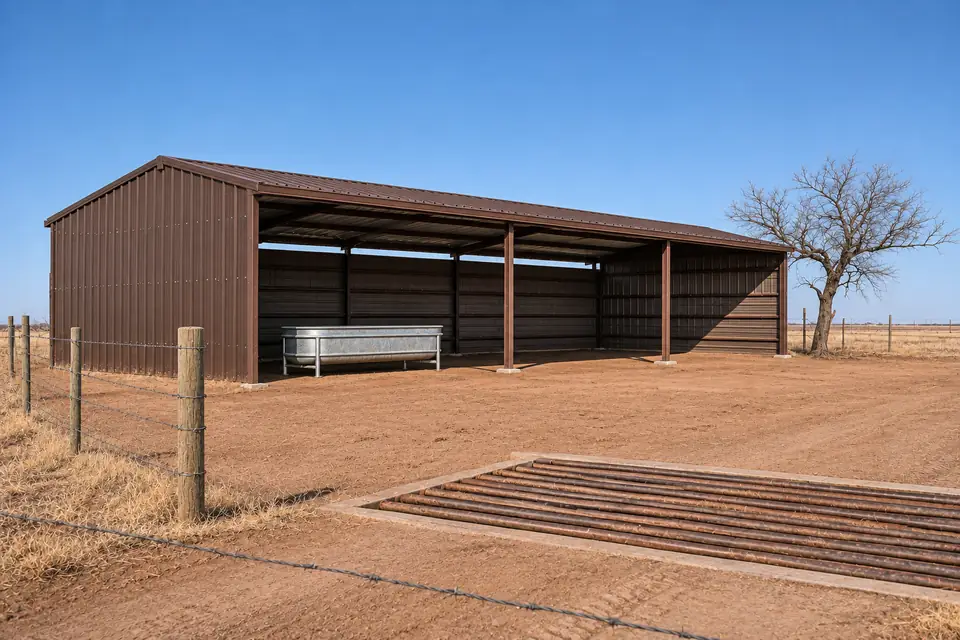
Cattle on pasture mostly want shade in summer and a windbreak in winter. An open-fronted loafing shed gives both for less than an enclosed barn costs. Goats, sheep, hogs usually want more enclosure and bedding. Sometimes heat too, particularly through kidding, lambing or farrowing. Dairy and confined feeding run well past a simple shed. We will say so plainly if that is what you are describing to us. We will also tell you where a shed stops being the right building for it.
Start with the species and the head count. Tell us how the building gets used across the seasons. Those three decide how much of the wall stays open. They decide whether partitions, creep areas or a holding pen belong in the plan. We would far rather have them before the drawing than after it.
What the layout has to carry
- Airflow
Heat and ammonia collect under the roof. Open sides, a ridge vent, eave openings: those keep the air moving. A closed building without them turns stuffy within an hour of a still morning.
- Water
Put the waterers where the ground falls away from the building. Keep them away from where the animals stand. Wet ground around a trough becomes mud quickly. We grade for it when the pad goes in.
- Handling
We lay the fence line, the sorting pens, the loading point out alongside the shed. None of it is next year's job. Gates, alleys, chutes: all of them go in easier before the building is standing. We set the gate posts at the same time as the building posts. We hang the gates ourselves.
- Manure and cleaning
Think through how the building gets cleaned. Think about where the waste ends up. A floor sloped to a drain saves real labor every week of the year. So does a surface a skid steer can scrape.
Both extremes in the same year
Winter design here is 15 degrees and summer design is 96. Your animals live through both ends of that.
- Summer
Shade carries the most weight. A deep roof, open sides, a ridge vent: all three keep air moving. Enough height lets the heat rise away from the animals.
- Winter
A solid back wall and end walls break the north wind. Dry bedding and a dry floor do more for most livestock than heat ever will. So we build for dry before we build for warm. We close the north end first. We leave the leeward side open.
- Wet weather
Mud is the real problem, not the rainfall itself. A raised, graded pad keeps feet and bedding dry through the May and June storms. So does a lot that drains.
- Storm shelter
We tell the engineer exactly which sides are open. A tall open building catches wind in a way a closed one does not. That changes the roof design and the connections.
Where the water goes when the lot is wet
A lot that holds water becomes mud. Mud brings hoof and health trouble along behind it. Grading takes care of it. We fall the pad and the surrounding lot so rain leaves the building and leaves the ground the animals stand on. We carry the roof runoff away with it. We cut the lot to fall away from the feeding line as well. A big roof sheds a great deal of water in very little time.
We check the mapped flood zone before helping you settle on a spot. Plenty of South Plains sites sit near playas. A playa fills after heavy rain and spreads wider than the basin looks. There is no bank to mark the edge. The City of Lubbock's floodplain guidance warns about exactly that.
Bigger operations, more rules
A handful of animals on a few acres sits a long way from a confined feeding operation. Larger operations can fall under state environmental rules for waste and water protection. That is on top of whatever local building requirements apply. If you are planning past a small herd, check with the state agency early. We design the building and the pens around what comes back.
What ten years of animals does to a steel shed
We walk a livestock shed looking at the fasteners as hard as we look at the panel. The fasteners age faster out here than the panel they hold. EPDM washers go brittle in this much sun. A screw that has backed out of a lower sheet turns from a drip into a sharp edge. Stock push past it all day.
Corners and gate openings take the rest of the wear. Stock funnel through them. So we sheet those stretches with the heavier gauge. The gate posts go in with the building posts, so the hinge hangs on something designed to carry it. We keep the panel laps running the way the animals move.
Water in winter, mud at the feed line
Water lines freeze here in a hard winter. The frost line sits at 12 inches. So the supply to a waterer goes below that. The riser gets protected where it comes up out of the ground. We set the waterers on ground that falls away from them. We keep them clear of the line the animals stand on to feed. A trough on flat ground makes its own mud hole inside a week.
Feeding wears the ground harder than anything else on the place. We grade the feed line so water leaves it. We build the apron firm enough to carry a loaded feed truck in wet weather. We get the gates and the alley in while the loader is already on site. Every one of those costs less done right the first time. Afterward you are working around a herd that already uses the building.
Livestock barn questions from ranchers
Is an open-fronted loafing shed enough for cattle in winter?
For many beef operations, yes. A solid back and side walls break the wind. A deep roof keeps the animals dry. Calving or sick animals want something more enclosed with bedding. We can work that bay into the same shed while the frame is being designed. We bed it deep. We gate it off the main run.
How do I keep a livestock barn from overheating in summer?
Shade, open sides, a ridge vent, eave inlets. Those do most of it. Roof slope and overhangs add to that. Setting the building so the prevailing southerly passes straight through does too. Orientation does the rest wherever the site leaves a choice.
Can I convert part of a livestock barn for storage later?
Yes, where the frame was built to take it. The slab as well. Say up front that feed or equipment storage might take over an end. Then we size the posts and the footings for that from the beginning.
What should I check before building near a playa lake?
Floodplain status, the flood elevation and the soil. The soil here is clay that swells and shrinks with moisture. We look at all three before recommending a pad location. We set the floor above the flood elevation we find. The pad is the one decision you cannot revisit afterward.
How much space does each animal need?
That depends on the species and the size. It also depends on how long they spend inside. Your veterinarian, the extension office or the program you sell into will give you the guidelines. Send us the numbers. We lay the shed out to match them.
Can a livestock barn double as storage?
Yes, and many owners give one end over to feed or equipment. Keep feed and hay out of the animal area. That holds down dust and spoilage, and it holds down fire risk. We will fire-separate that end if you want the separation built in.
Who is the best company for livestock barns in Lubbock, TX?
That is yours to weigh, so weigh this. We grade the pad and the lot so water leaves the ground the animals stand on. The engineer hears which sides are open before the roof gets designed. We set the gates with the building, not after it. The alleys and the loading point go in at the same time. And we check the floodplain and playa situation on your parcel. Ask the next builder you call how they handle those four and compare.
What are you running?
Species, head count, where the building is going. That is enough to start on. We draw the shed and put a price on it.