Pole Barn Repair in Lubbock, TX
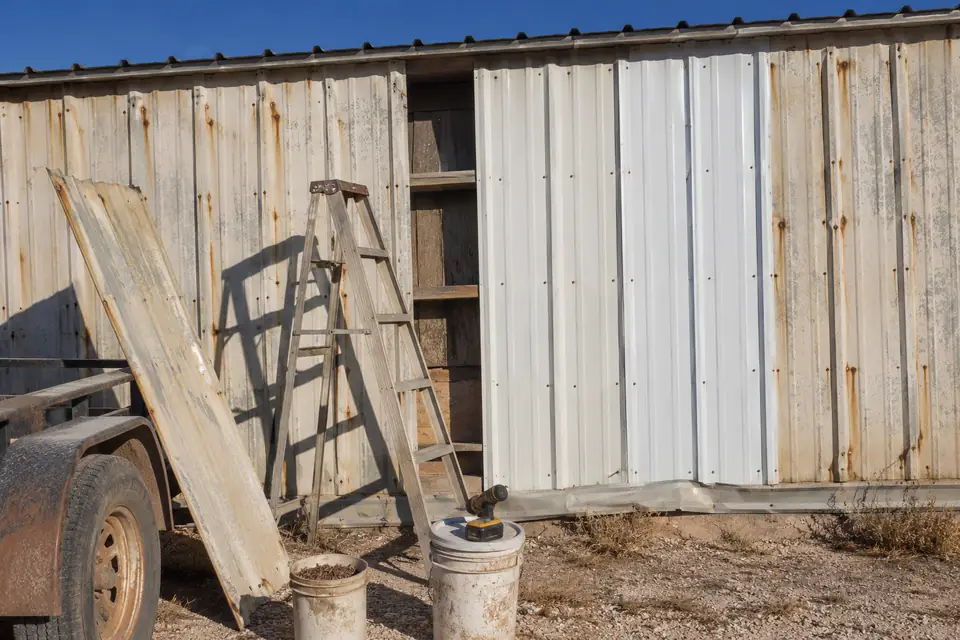
Three things bring us out on pole barn repair in Lubbock. Age is the one owners never see coming. Galvanized fasteners start showing red rust somewhere around ten to fifteen years. The EPDM washers under their heads harden and crack in roughly 3,200 hours of sunshine a year. A panel can be perforated at the screw line by then. So Pole Barn Builders Lubbock TX looks at the whole run of fasteners, not the single screw you noticed.
Wind and hail are the other two. Roughly 325 hail reports a year land in this radar area. May is the worst month, then June. A 4.5 inch stone fell at 98th Street and Upland Avenue in June 2023. That is the size that punctures, not the size that dents. Our first look is at the frame, the footings, the fastener lines. We work to whatever order your adjuster wants things documented in. Describe the damage, say how old the building is, and send photographs if you have them.
Get a quote on your building
We Repair Pole Barns in Lubbock From the Fasteners Out
Wind, hail, age: those drive most repair calls out here. A storm bends or tears panels, lifts a ridge cap, or shoves a door out of its frame. Hail dents and sometimes punctures roofing. This radar area averages about fifty hail days a year. May and June are the worst of them. EPDM washers crack under UV, screws back out, and the leaks follow. Posts rot at and just below the ground line, where moisture sits.
Every one of those has a cause sitting behind it. A torn panel can mean the fastening pattern was too sparse in that corner. A racked door can mean a post has moved. We find the cause before we order a panel. Replacing only what shows buys you the same repair again in a few years.
Reading the damage before we quote
| What you see | What may be behind it | Typical repair |
|---|---|---|
| Bent or torn wall or roof panels | Wind pressure at an edge or corner; too few or loose screws | Replace panels and add or upgrade fasteners in that zone |
| Door that binds, drags or will not close | Frame racked or a post shifted; track or hanger failure | Check the posts and header, then realign or replace the door hardware |
| Leaks around screws | Aged washers; screws backed out | Replace screws with larger-diameter ones or add sealant; reseat or replace panels if holes are enlarged |
| Soft or crumbling wood at ground level | Rot in the post below grade | Sister or replace the post and add a proper footing |
| Roof that sags or wobbles | Overloaded or damaged trusses or purlins | Have an engineer assess before loading or patching |
What to do first after a storm
- Step 01Keep clear
Stay out of a damaged building until somebody has looked at the frame. A racked post gives very little warning before it lets go. So does a cracked truss.
- Step 02Photograph everything
Photograph the lot before any cleanup. Shoot it from several angles. Get some from a distance as well as up close.
- Step 03Call your insurer
Ask the insurer what they want documented before repairs begin. That order matters to a claim.
- Step 04Get it assessed
We check the frame, the footings, the fasteners before any panel gets patched. We walk the whole building with you.
What we look at on a repair call
- The cause
Wind, hail, age, settlement, a collision, a poor original installation. Each one points somewhere different. We settle which it was before we write a scope.
- The structure behind the skin
Panels hide the posts and the trusses. Cosmetic damage takes a panel swap. A frame that has moved gets dealt with first. We pull steel off to find out which it is. Judging from the outside does not tell you.
- Matching the original
Panel profile, gauge, color: all three have to line up with what is standing. Some older colors and profiles are no longer made at all. We check availability before we promise you a match. We tell you what is actually on the shelf before you decide.
- Whether repair makes sense
Widespread damage sometimes costs more to patch than to re-skin a whole wall. We price both options. The comparison goes in front of you.
Why a leak is almost never one screw
Fasteners age as a population. Not one at a time. We price the elevation and not the drip.
- Where the screw sits
On R-panel the screws land in the flat between the ribs, not on top of them. That is the right place for a seal. It is the wrong place to be holding water. A screw driven slightly too hard dishes that flat so the washer never seats again. It is the most common thing we find on a barn that was screwed off fast.
- What the washer does
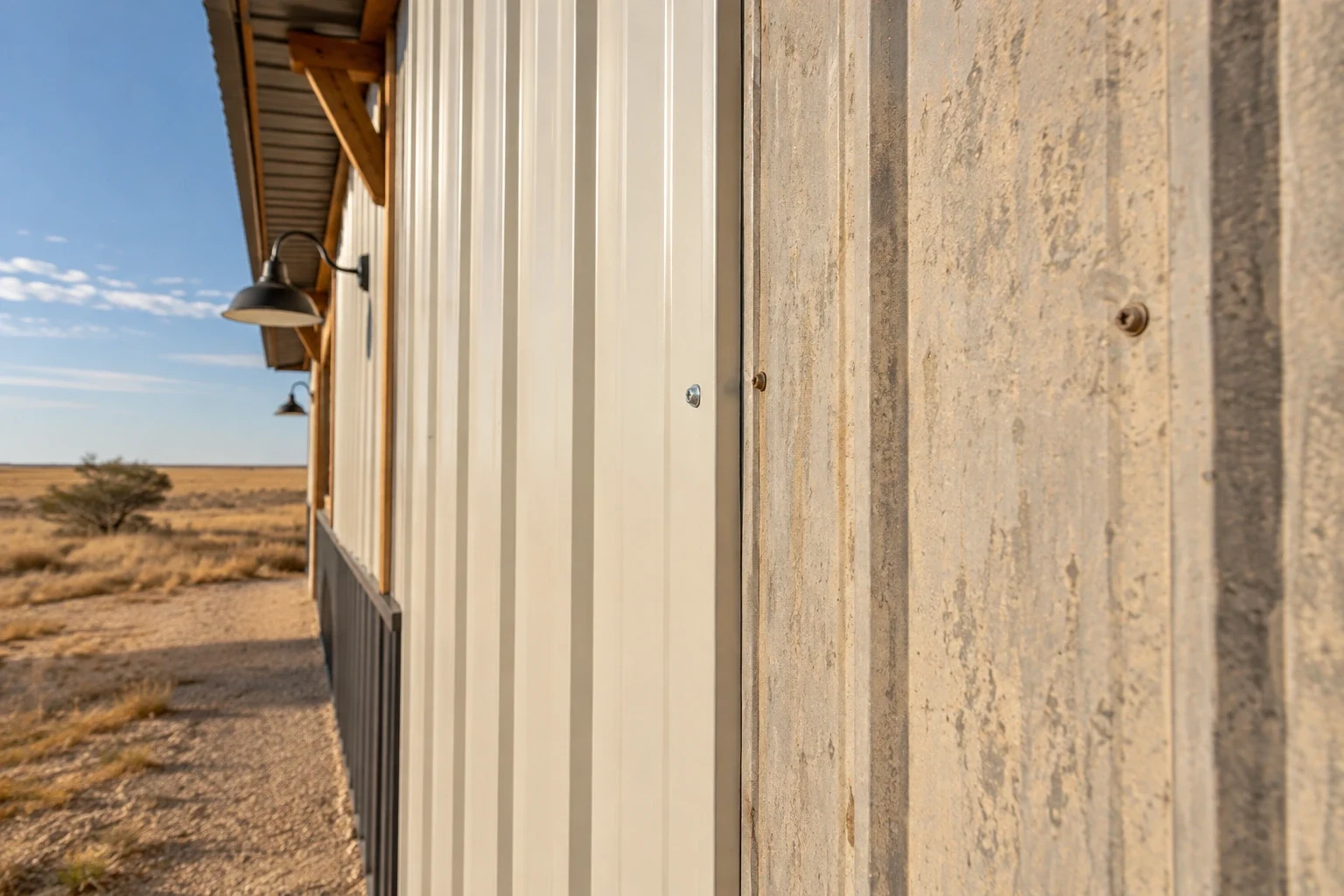
The EPDM washer under the head is the seal. UV hardens it and cracks it. Once one has gone on a south or west elevation, every neighbor on that wall has had the same exposure for the same number of years. We quote them as a set.
- Backing out
Panels expand and contract daily. A screw works itself loose in the same hole. Going back with the same diameter puts a loose fastener in a worn hole. We step up a size or move the fixing to solid material.
- Perforation at the head
By ten to fifteen years the metal around a rusting fastener can be gone. Not just its coating. We get a light behind the hole before quoting a screw. A perforated flat needs a panel, not a washer.
Do not go inside a damaged barn
Damaged buildings fail without warning. Stay out of a barn with a sagging roof, leaning posts or hanging panels. Keep people and animals clear after a storm until the frame has been looked at. We do that part before we touch anything else.
We photograph what we find as well. We work to whatever sequence your adjuster asks for. Document the damage yourself before cleanup starts, since a tidied site is a harder claim to make.
Repair questions we get after a storm
Can bent steel panels be straightened?
Rarely worth the attempt. Straightening a creased panel weakens the metal and it almost never seals again. We take those off. New steel goes on.
How do I stop a leak around screws?
Larger-diameter screws with fresh washers, or sealing, depending on the state of the hole. We go over the whole run, not just the one dripping on your tractor.
What if my posts are rotting?
Sistering works on some posts. Others have to come out and go on a new footing. How much of the post has gone decides which. We need that answer before we quote, which is why we dig down to the ground line. We do not price a post off the part you can see.
Is it worth repairing an old pole barn?
Usually, where the frame is still sound. Where the frame itself is failing, rebuilding the failed parts costs less than a run of patches. The same is true where the damage runs the length of the whole building.
Do I need a permit for repairs?
Sometimes. Minor repairs often need no permit and structural work can need one. We check it for you before anything starts. Which authority has jurisdiction depends on whether the site sits inside a city's limits or out in the unincorporated county.
Can you strengthen the barn at the same time?
Yes, and a repair is the right moment for it. Bracing and better hardware both cost less while we already have the panels off. Tighter fastening is cheaper then too.
Should I patch a leak myself?
Sealant holds a leak for a while and buys time, nothing more. Send us a photograph. A leak usually means a failed fastener or a failed panel. We will tell you which one you are looking at.
How can I tell whether hail damage is cosmetic?
Dents on their own usually are. A puncture is not. Neither are cracked seams, damaged coating or an active leak. 29-gauge panel carries no dent resistance to speak of where 26-gauge does. Pick the gauge with that in mind.
Who is the best company for pole barn repair in Lubbock, TX?
We would rather you asked how a builder diagnoses than who is best. Here is what happens on a repair call. The damage gets traced to its cause before anything is quoted. Steel comes off where the frame may have moved, not judged from the ground. A suspect post gets dug to the ground line. We say plainly when re-skinning a wall costs less than patching it. Fasteners get upgraded in the zone that failed, and not swapped like for like. We go back with 26-gauge. The original was dented 29-gauge. Ask whoever else you call what they would check first. Our quotes and site visits are chargeable, and you will have the number up front.
What happened to the building?
We will tell you what the repair involves.