Pole Barn Builders in Post, TX
We take work as pole barn builders in Post, TX for ranch shelter, hay barns, equipment bays, shops. On a Garza County job most of the thinking happens before the building is ever sized. Tell us what has to fit under roof and what has to drive past it, in feet. A bay sized to a tractor and a bay sized to a gooseneck trailer are not the same building. Pole Barn Builders Lubbock TX lays out the access first, then the building.
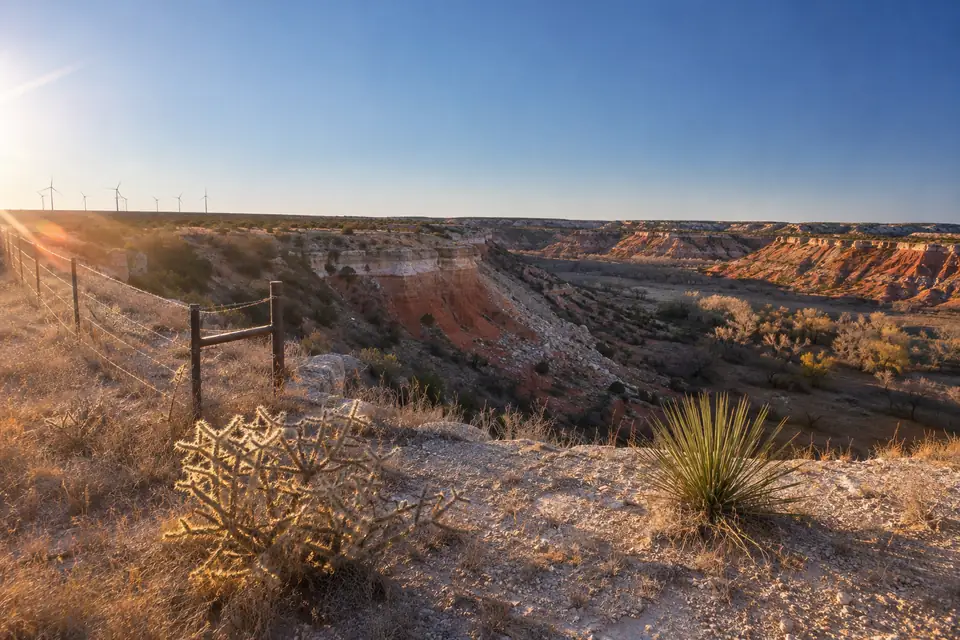
At Post the Caprock Escarpment runs out and the land breaks into slope and rock. That decides where a building can sit more than the building itself does. Water comes off that ground fast and collects in the draws below. We find the stable bench. We stake the pad above the drainage line and set the footings to the layer we actually hit. No Texas county has been granted authority to zone or enforce a building code outside city limits. A permit inside Post comes from the city. Beyond the limits the engineering is what you are relying on. Send the lot lines and the fall of the land.
Get a quote on your building
Below the Caprock at Post
Water that gathers on flat farmland above the escarpment arrives down here with speed behind it. It carries sand and silt along the draws. A building set across one of those paths gets undermined, not merely flooded. We choose the position before we choose the size.
A bench is a flat and stable shelf of ground, and that is what we hunt for on a sloping parcel. Cutting one into the hillside works, and so does building it up on the low side. Either way we grade the finished pad to shed water around itself, never into its own posts.
Bare cut slopes gully in a single storm out here. We seed, rock or terrace whatever we disturb before we leave the job. A cut that starts to run takes the drive first. Then a corner of the pad.
Rock, caliche and footings at odd depths
Where the hard layer sits
We auger test holes at more than one corner before pricing footings on broken country. The depth to cemented ground changes across a single hole pattern. It arrives sooner here than out on the plains.
Posts to the layer
On a slope the same bearing layer sits at a different elevation under each column line. Our posts follow the layer. Not a single number copied off a plan sheet. Our engineer needs the slope to size the footings and the bracing.
Hard digging, good bearing
Caliche runs around 60 percent calcium carbonate and goes near rock-hard with depth. That gives us excellent bearing once we are through it, and a slow auger getting there. We bring equipment sized for it. We say upfront when the hole count will drive the dig.
Who regulates a build in Post and Garza County
Post is the Garza County seat. The city offices and the county offices sit in the same town. It is easy to ask the wrong desk. A lot inside the city limits follows city rules on setbacks, height, permits. A ranch parcel outside them does not.
Texas counties have never been granted authority to adopt zoning in unincorporated territory. Nor a meaningful building code. That leaves septic, floodplain development, county road access as the things still regulated. We confirm the county position on your parcel before a design goes final. Once the pad, the drive, the cut together disturb an acre, the job also needs a state stormwater notice under the TCEQ construction general permit.
Floodplain carries more weight here than the acreage suggests. A draw pushes a mapped flood area up onto ground that looks dry and high from the gate. A pad that lands inside a mapped zone either moves or meets what the zone demands.
Ranch buildings that earn their keep here
- Loafing sheds and shade
Open-front shelter for cattle. Prevailing wind runs southerly in hot conditions. We set the open side from the exposure on your ground, not from a drawing.
- Hay barns
Open sides for airflow. A floor raised above grade. Runoff coming off the slope above never reaches the bottom bales.
- Equipment and shop bays
A clear-span bay with a concrete work area at one end. The opening comes off the tallest implement, including whatever folds up on top of it.
- Horse barns and working pens
Stalls, a run-in, tack space. The drainage gets settled ahead of the layout.
Wind at the edge of the plains
The plain above Post is as open as ground gets, and the rim is exposed from both sides at once. We design for open-terrain exposure here. No frame comes off a sheltered site to save drawing time.
Uplift governs these roofs, not weight. Post-frame carries its load on embedded columns, which is why we use it where the ground moves. We follow the path from purlin to truss to column to footing. A roof cannot peel off a frame that is still standing.
Big sliding doors on an open-front shed let go first in a gust. We brace the jambs and the header for the pressure. Ground snow load is 15 psf and does not size these trusses. The amendment allowing no roof live load reduction at or below 4:12 does. Nearly every ranch roof we raise sits at 3:12 or 4:12.
Getting onto the place
- Lease roads
We drive the access route ourselves before we schedule a pour. Plenty of what gets called a road out here was graded for a lease, not for a concrete truck. A mixer that cannot reach our pad wastes a day on both sides.
- Pipelines
Gathering and transmission lines cross this country under recorded easements, and nothing of ours goes inside one. We take the width off the instrument and we call locates before the auger turns.
- Gates and cattle guards
Measure the narrowest gate. Measure the weakest cattle guard on the route in. A panel truck that has to back out of a two-mile lane has lost the morning.
- Culverts onto county roads
We start the culvert request early. A new approach onto a Garza County road takes the county's sign-off and a culvert sized for the ditch. None of that runs on our schedule.
Panel and slope on a ranch roof
Ag panel is the lighter profile. A three quarter inch rib at 9 inches on center, 36 inches of coverage, 29 or 26 gauge. It wants at least a two and a half in twelve slope to drain. R-panel will run down to half an inch in twelve. That suits a building that genuinely needs a low roof.
29 gauge comes with no advanced dent resistance, and hail here peaks in May and then June. 26 gauge is what we quote. Galvanizing fades to a matte gray over two to five years, and it fades slower in dry country. A finish you expect to stay bright is not the one to choose.
Questions about building near Post
Is the ground rocky around Post?
In a lot of places, yes. The depth to the hard layer changes within one building footprint. Hard ground gives good bearing and a slow auger. We drill test holes at more than one corner of the pad before we quote.
What about runoff from the plains?
Keep the building out of the draws. Route the water around the pad before it finds its own way through. Protect the cut slopes too, because an unprotected bank gullies in one storm and takes the drive with it.
Do I need a permit from Garza County?
We ask the county about your parcel. Texas counties hold no zoning authority in unincorporated territory, so often no permit exists for the building. Septic and floodplain development still do, and so does a new county road approach. Inside the city limits, the city answers it.
Can you build at the very edge of the caprock?
Sometimes. The rim is exposed to wind from both sides, and it erodes. We look for the stable bench back from the edge. We set the drainage before committing to a position. A rim lot usually needs more grading than the view from it suggests.
Who is the best company for pole barns in Post, TX?
Compare how each builder handles the slope, since that is what this ground charges you for. We auger test holes at more than one corner. Posts go down to the bearing layer, not to one depth taken off a plan. We grade the pad to shed water around itself and protect the cuts before we leave. We drive the access route before scheduling a pour. We charge for the site visit and for the quote. Call 806-581-1043 and tell us where the gate is and what the access looks like.
Planning a ranch building near Post?
Tell us the use and walk us over the ground. We will pick the bench. Then we set the drainage and quote it.