What Actually Drives Pole Barn Cost Here | The Decisions That Move a Quote, Not a Price List
A price-per-square-foot figure is a marketing number, not an estimating tool. What actually moves a South Plains pole barn quote is dimensions, the wind engineering the site requires, the steel gauge specified, and the features added on top.
Get a quote on your building
Tell us the size, the use and where the site is. We will come back with a scope and a price, not a brochure.
Why we won't quote a price per square foot
A price per square foot is a useful marketing number and a genuinely poor estimating tool. Two buildings with an identical footprint can differ substantially in real cost depending on eave height, the number and type of openings, the wind engineering the specific site requires, and how much concrete is involved. Quoting a flat rate assumes all of that away.
When someone quotes a rate per square foot, they're really describing a typical building. Whether yours is typical is the actual question, and it's usually not, once you get into the specifics of what you're building and where.
Dimensions, and the way height moves cost faster than footprint
Width and length matter, but eave height moves cost in ways that aren't obvious up front. Taller columns cost more and need to carry the same load over a longer unbraced length, which can mean a heavier column spec. Wall area increases with height, meaning more cladding and more girts. Wind pressure on a taller wall increases too, which affects bracing.
It's rarely the reason to build shorter than you need, though. Height is the dimension people most often wish they'd increased and the one that's hardest to change after the fact, so it's worth getting genuinely right rather than trimmed to save a little upfront.
Wind and load engineering specific to your site
Lubbock County's 120 to 130 mph design wind speed, and whichever Exposure Category your specific site falls into, drive real structural decisions: column spacing, bracing, connection hardware, footing size. A site in open Exposure C terrain carries a heavier bracing spec than a more sheltered one, even at an identical footprint and wind speed rating.
This is engineering, not an upsell. Two quotes for the same footprint can legitimately differ because one properly accounts for the site's actual wind exposure and the other used a generic assumption.
Steel gauge: 14-gauge standard versus 12-gauge heavy-duty
Framing steel gauge is a genuine spec decision, not just a price lever. Standard 14-gauge steel suits a lot of residential and light agricultural buildings. Heavier 12-gauge is worth the upgrade on a building that will see real commercial duty or unusually demanding loads, and we'll recommend whichever the load case actually calls for rather than defaulting to either one.
The gauge you choose also interacts with column spacing and clear-span requirements, so it's worth deciding early rather than adjusting it after other parts of the design are locked in.
Openings and features: where a quote actually diverges
Every door and window is structure, not just a hole in a wall. It removes wall area and puts the load that area was carrying into a header and jamb columns, which is why opening count and type move cost more than most people expect. An oversized door, insulation, and interior finish all add cost on top of the base structure, and each one is worth pricing individually rather than lumped into a vague allowance.
The line items that actually move a South Plains pole barn quote are the building's overall dimensions (width, length, height), the wind engineering the site requires, whether the steel is standard 14-gauge or heavier 12-gauge, and which extras, roll-up doors, windows, insulation, get specified. We itemize every quote around exactly those four lines so you can see what each decision is costing.
Site work: the line most quotes handle differently
Two identical buildings a short distance apart can carry meaningfully different site-prep costs, because it depends entirely on what's actually under the ground, how far a suitable fill material has to travel, and how much grading the specific parcel needs before it's ready to build on. A quote that includes a vague “customer to provide level pad” line can mean a substantial amount of work landing on you later that a more complete quote would have priced up front.
This is also the line where cutting corners does the most long-term damage, since the foundation and everything above it sits on whatever the site prep leaves behind. If a budget genuinely has to give somewhere, the concrete floor or an extra opening are far better places to trim than the ground work or the footing depth, both of which are permanent and invisible once the building is finished.
Questions on this topic
Why won't you give me a price per square foot over the phone?
Because it describes a typical building, and whether yours is typical depends on eave height, opening count, wind engineering and steel gauge, all of which can move cost substantially even at an identical footprint. We'd rather break a real quote down line by line.
What's the single biggest cost lever on a pole barn?
Usually eave height, since it affects column size, wall area, bracing and door sizing all at once. On buildings with a lot of concrete floor, that can rival or exceed height as the largest single line.
Is 12-gauge steel worth the upgrade over 14-gauge?
On a building that will see real commercial duty or carries unusually demanding loads, generally yes. For a lot of residential and light agricultural buildings, standard 14-gauge is the right call. We'll recommend whichever the specific load case actually needs.
Do more doors and windows really add that much cost?
Yes, because each opening removes structural wall area and requires a header and jamb columns sized to carry the load that area was carrying. Opening count and size affect price more than most people expect.
Does Lubbock County's wind speed actually change the quote, or is that just paperwork?
It's a real structural input. Column spacing, bracing, connection hardware and footing size are all sized to the wind pressure at your specific site's exposure category, and that's a genuine engineering decision, not a formality added to the paperwork.
Are site visits and quotes free?
Yes, and there's no obligation attached to either. We'd rather spend an hour on your actual site than produce a number from a satellite photo.
Do you charge extra to itemize the quote?
No. Every quote we give is broken down by the same four lines, dimensions, wind engineering, steel gauge, and features, at no extra cost, specifically so you can see what each decision is costing.
Do permit fees factor into the total cost?
Permit fees are a real line item, set by whichever office has jurisdiction, the Lubbock County Building Permits Office or the relevant city building department, and passed through at cost rather than marked up. We'll tell you which applies before you commit to anything.
Other guides
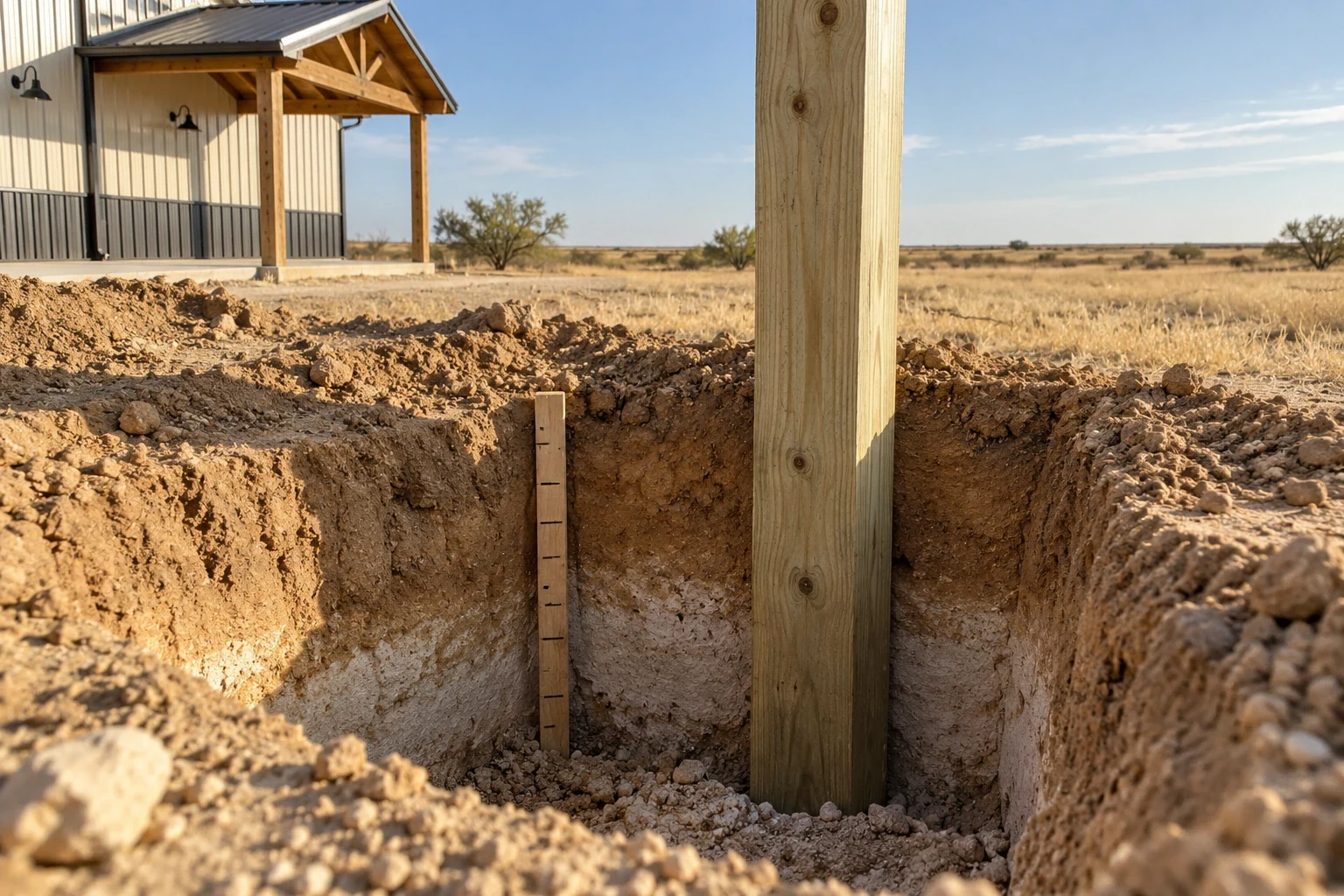 South Plains Soil & Foundation GuideSouth Plains ground is not one material. A single footing hole can pass through sandy loam
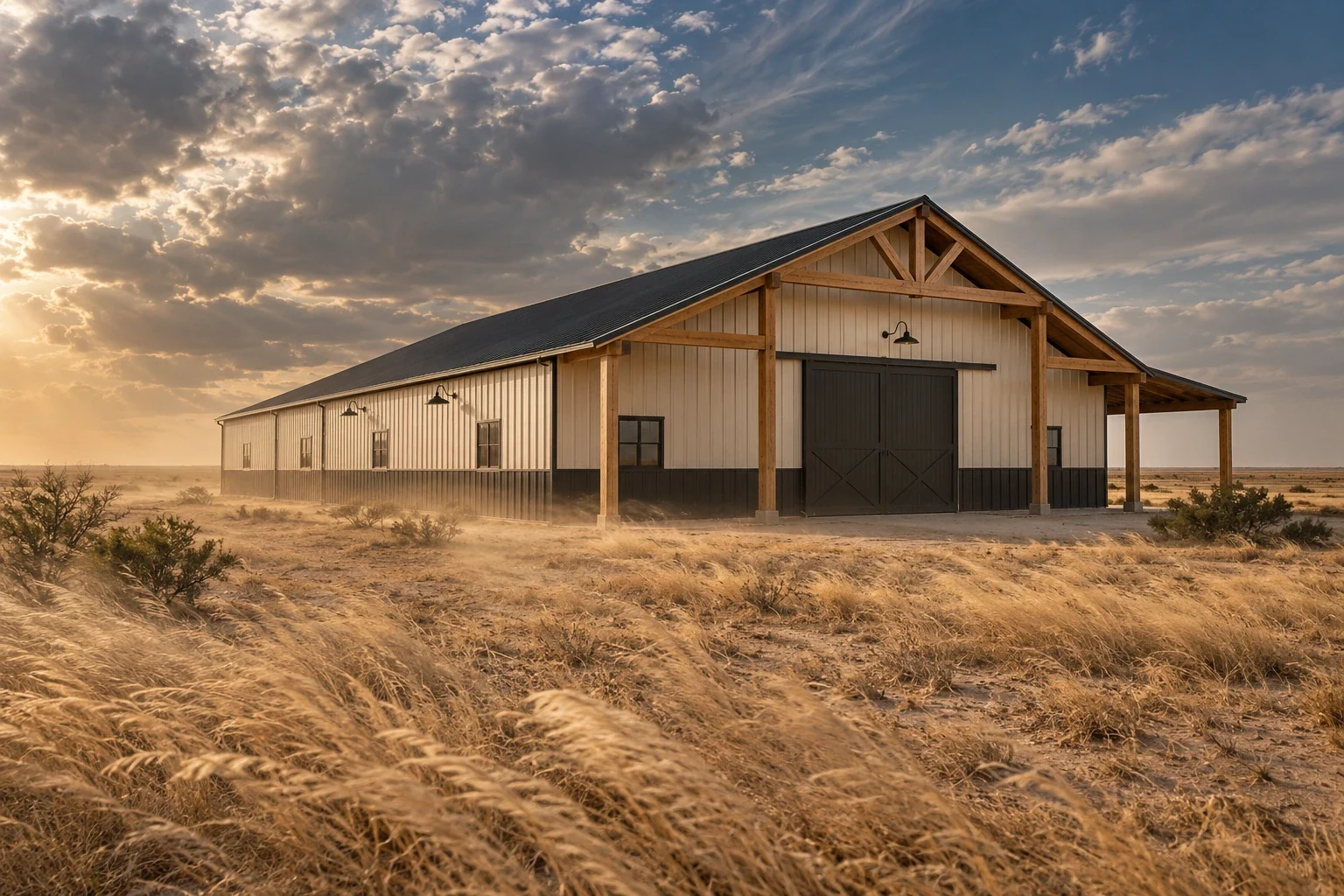 Lubbock Wind Load & ASCE 7-22 Engineering GuideLubbock County's design wind speed runs 120 to 130 mph under ASCE 7, and the South Plains'
 Lubbock County & City Permits & Zoning GuideWhether a pole barn permit runs through a city building department or the Lubbock County B
Get a quote broken down properly
Tell us what you want to build and we'll itemize it, so you can see which decisions are costing what.